Love Nuclear
Drafted with AI assistance. Every factual claim was checked against primary sources in August 2026; the sources are listed at the end of this article.
One of the most persistent myths in clean energy discussions is that nuclear power and renewable energy are competitors that cannot coexist. This false dichotomy has dominated energy policy debates for decades, forcing policymakers and the public to choose between nuclear and renewables when the scientific evidence clearly shows they work best as partners. The reality is that nuclear power and renewable energy sources like wind and solar are complementary technologies that together can provide a reliable, clean, and affordable electricity system that neither could achieve alone.
The framing of nuclear versus renewables as an either-or choice fundamentally misunderstands how modern electricity systems work. Electricity grids require a diverse mix of generation sources with different characteristics to maintain reliability, affordability, and environmental performance. No single technology—whether nuclear, solar, wind, or any other—can optimally meet all of these requirements simultaneously.
Electricity demand varies constantly throughout the day and across seasons, while supply from different sources fluctuates based on fuel availability, weather conditions, and maintenance requirements. A robust electricity system needs generation sources that can provide baseload power (steady, reliable output), load-following capability (ability to adjust output to match demand), and peak power (rapid response to sudden demand spikes).
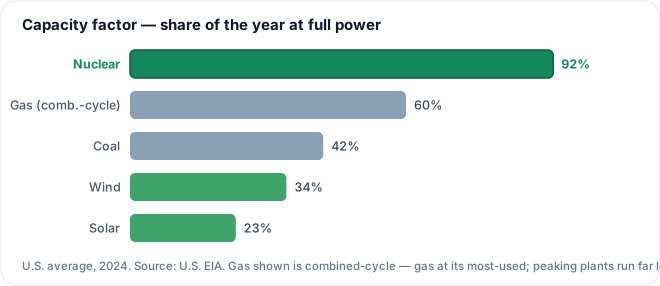
Nuclear power and renewables each excel in different aspects of this complex system. Nuclear provides exceptional baseload power with very high capacity factors (typically over 90%), meaning nuclear plants generate electricity more than 90% of the time they're available to operate [1]. Solar and wind provide clean electricity when weather conditions are favorable, often at very low marginal costs. Rather than competing, these technologies complement each other to create a more reliable and cleaner electricity system than either could provide alone.
!Bar chart of capacity factor by energy source
Nuclear runs near full power around the clock; solar and wind run only when conditions allow.
Nuclear power and renewable energy sources have characteristics that naturally complement each other:
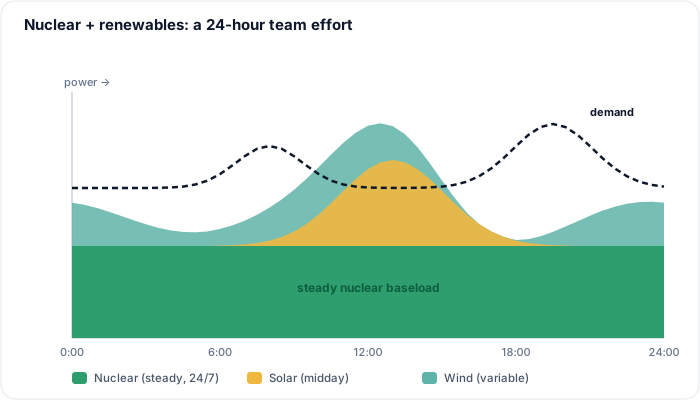
Reliability and Variability: Nuclear plants provide steady, predictable electricity output 24 hours a day, 365 days a year, regardless of weather conditions. This reliability perfectly complements the variable output of solar and wind power, which depends on sunshine and wind patterns. When the sun isn't shining or the wind isn't blowing, nuclear power can continue providing clean electricity.
Capacity Factor Synergy: Nuclear plants run at roughly 90-93% capacity factor. Wind averages about 34% in the United States and solar about 23%, with the best sites and newest offshore turbines reaching considerably higher [1]. This means nuclear plants generate electricity most of the time, while renewable plants generate electricity only when conditions are favorable. Together, they can provide much higher overall clean electricity generation than either technology alone.
Seasonal Complementarity: Solar output is typically highest in summer when air conditioning demand peaks, while nuclear output remains constant year-round. Wind patterns often provide higher output in winter months. This seasonal complementarity helps match electricity supply with demand patterns throughout the year.
Grid Stability Services: Nuclear plants provide important grid stability services including voltage support, frequency regulation, and inertia that help maintain grid reliability. These services become increasingly valuable as more variable renewable energy is added to the grid.
Economic Complementarity: Nuclear power has high capital costs but very low operating costs, while renewables have moderate capital costs and essentially zero fuel costs. This economic complementarity can provide stable, long-term electricity prices that benefit consumers.
Several countries demonstrate how nuclear power and renewables can work together effectively:
France: France generates about 68% of its electricity from nuclear — down from a peak above 75%, and having dipped to ~63% in 2022 during a fleet-wide corrosion inspection programme — and is expanding renewables alongside it. The combination has given France one of the cleanest electricity systems in the world, with carbon emissions of about 40-60 grams CO2 per kilowatt-hour compared to over 400 grams in countries that rely heavily on fossil fuels [2]. France's nuclear baseload enables higher renewable penetration by providing the stability needed to integrate variable sources.
Ontario, Canada: Ontario eliminated coal from its grid entirely by 2014, leaning on nuclear and hydro. In 2024 its mix was about 48% nuclear, 23% hydro, 17% gas and oil, 9% wind and 2% solar. The gas is worth naming rather than omitting: Ontario is a genuine success story that still burns some gas for flexibility, and saying so is more convincing than implying it doesn't.
Sweden: Sweden's 2024 mix was about 38% hydro, 29% nuclear and 23% wind — the two firm, dispatchable sources carrying two-thirds of the grid between them. This combination has given Sweden one of the lowest carbon electricity systems globally while maintaining energy security and industrial competitiveness.
South Korea: Nuclear supplied about 32% of South Korean electricity in 2024, up from around 26% in 2019, alongside growing renewables — a deliberate reversal of an earlier phase-out policy, driven by the cost of imported fossil fuels. The nuclear-renewable combination supports the country's manufacturing economy while reducing emissions.
These examples demonstrate that nuclear and renewables are not only compatible but mutually reinforcing, creating cleaner, more reliable electricity systems than either technology could provide alone.
Nuclear power actually enables higher penetration of renewable energy by providing the grid stability and reliability services that variable renewables cannot provide:
Grid Inertia: Nuclear plants provide rotational inertia that helps maintain grid frequency stability. As more solar and wind power (which provide no inertia) are added to the grid, nuclear plants become increasingly valuable for maintaining stability.
Voltage Support: Nuclear plants provide reactive power and voltage support that are essential for grid reliability. These services become more important as renewable penetration increases.
Load Following: Modern nuclear plants can adjust their output to complement renewable generation, increasing output when renewables are producing less and decreasing output when renewables are abundant.
Backup Power: Nuclear plants provide reliable backup power when renewable output is low due to weather conditions, reducing the need for fossil fuel backup generation.
Reduced Storage Requirements: The combination of nuclear baseload and renewable generation reduces the amount of energy storage needed to maintain grid reliability, lowering overall system costs.
The International Atomic Energy Agency (IAEA) has identified hybrid energy systems combining nuclear and renewables as a key pathway to deep decarbonization [3]. These systems can provide multiple benefits:
Electricity Generation: Hybrid systems can provide clean electricity with higher capacity factors and greater reliability than either nuclear or renewables alone.
Industrial Heat: Nuclear plants can provide high-temperature heat for industrial processes while renewables provide electricity, enabling comprehensive industrial decarbonization.
Hydrogen Production: Nuclear plants can provide the steady, high-temperature heat needed for efficient hydrogen production, while renewables can provide additional electricity for electrolysis during peak output periods.
Desalination: Nuclear-renewable hybrid systems can provide both the electricity and heat needed for large-scale seawater desalination, addressing water scarcity while maintaining energy security.
District Heating: Nuclear plants can provide waste heat for district heating systems, while renewables provide electricity, creating highly efficient combined heat and power systems.
The combination of nuclear and renewables can provide economic benefits that neither technology achieves alone:
Price Stability: Nuclear power's stable operating costs combined with renewables' zero fuel costs can provide long-term price stability that benefits consumers and businesses.
Reduced Grid Costs: The combination reduces the need for expensive grid infrastructure, storage systems, and backup generation that would be required for very high renewable penetration.
Capacity Value: Nuclear power's high capacity factor provides capacity value that reduces the total amount of generation capacity needed in the system.
Avoided Curtailment: Nuclear plants can reduce output when renewable generation is high, avoiding the need to curtail renewable energy and maximising clean energy utilisation.
Industrial Competitiveness: Reliable, clean electricity from nuclear-renewable systems can support energy-intensive industries while meeting environmental goals.
Small Modular Reactors (SMRs) are particularly well-suited to complement renewable energy systems:
Flexibility: SMRs can be deployed in smaller increments that better match renewable capacity additions, allowing for more gradual and flexible system development.
Load Following: Many SMR designs have enhanced load-following capabilities that make them ideal partners for variable renewable generation.
Distributed Generation: SMRs can be deployed closer to load centers and renewable generation, reducing transmission requirements and improving system efficiency.
Industrial Applications: SMRs can provide both electricity and process heat for industrial applications, complementing renewable electricity generation.
Grid Services: SMRs can provide grid stability services that become increasingly valuable as renewable penetration increases.
!Chart of nuclear baseload plus solar and wind over 24 hours
Steady nuclear baseload plus variable solar and wind can meet demand around the clock.
One of the biggest challenges for high renewable penetration is the need for massive amounts of energy storage to provide electricity when the sun isn't shining and the wind isn't blowing. Nuclear power addresses this challenge by providing "clean firm power"—electricity that is both clean and available on demand.
Reduced Storage Needs: Nuclear baseload dramatically reduces the amount of battery storage or other storage technologies needed to maintain grid reliability with high renewable penetration.
Storage Economics: The combination of nuclear and renewables can be more cost-effective than renewables plus storage, particularly when the full costs of storage systems are considered.
Storage Technology Limitations: Current battery technology is well-suited for short-term storage (hours) but becomes extremely expensive for longer-term storage (days or weeks). Nuclear power eliminates the need for most long-term storage.
Resource Requirements: The materials required for massive battery storage systems (lithium, cobalt, nickel) are limited and environmentally problematic to extract. Nuclear power reduces these material requirements.
The optimal combination of nuclear and renewable energy varies by region based on local resources, demand patterns, and economic conditions:
High Solar Regions: Areas with excellent solar resources can use nuclear power to provide nighttime and winter electricity when solar output is low.
High Wind Regions: Areas with good wind resources can use nuclear power to provide electricity during calm periods and complement seasonal wind patterns.
Limited Renewable Resources: Regions with limited renewable resources can use nuclear power as the primary clean energy source while developing available renewable resources.
High Demand Density: Urban areas with high electricity demand can benefit from nuclear power's high energy density, while surrounding areas develop renewable resources.
Industrial Centers: Regions with energy-intensive industries can use nuclear power to provide reliable industrial heat and electricity while renewables provide additional clean electricity.
Many policy frameworks inadvertently create barriers to nuclear-renewable cooperation by treating them as competing rather than complementary technologies:
Technology-Neutral Policies: Clean energy policies should be technology-neutral, supporting all low-carbon technologies rather than picking winners and losers.
System-Wide Planning: Electricity system planning should consider the full system benefits of different technology combinations rather than evaluating technologies in isolation.
Market Design: Electricity markets should properly value reliability, grid services, and other benefits that nuclear power provides to support renewable integration.
Investment Frameworks: Investment policies should recognise the complementary nature of nuclear and renewables and support integrated clean energy development.
Research and Development: R&D programs should explore nuclear-renewable hybrid systems and the technologies needed to optimise their integration.
Natural gas is often promoted as a partner for renewable energy, providing backup power when renewables are not available. However, nuclear power offers significant advantages over natural gas as a renewable energy partner:
Zero Emissions: Nuclear power provides backup power without any greenhouse gas emissions, while natural gas plants emit substantial CO2.
Fuel Security: Nuclear fuel is domestically available in many countries and requires minimal storage, while natural gas often depends on imports and volatile markets.
Long-Term Reliability: Nuclear plants can operate for 60-80 years, providing long-term energy security, while natural gas infrastructure requires continuous fuel supply.
Air Quality: Nuclear power produces no air pollutants, while natural gas combustion produces nitrogen oxides and other pollutants that harm public health.
Price Stability: Nuclear power costs are largely independent of fuel prices, while natural gas electricity costs fluctuate with volatile gas markets.
Emerging technologies are creating new opportunities for nuclear-renewable integration:
Advanced Reactors: High-temperature reactors can provide both electricity and industrial heat, complementing renewable electricity generation for comprehensive industrial decarbonization.
Thermal Storage: Nuclear plants can charge thermal storage systems during low demand periods, providing dispatchable heat and electricity to complement renewable generation.
Power-to-X Technologies: Nuclear plants can provide the steady electricity needed for hydrogen production, synthetic fuel creation, and other power-to-X technologies that store renewable energy in chemical form.
Smart Grid Integration: Advanced control systems can optimise the operation of nuclear and renewable resources in real-time, maximising clean energy utilisation and system efficiency.
Microgrids: Small nuclear reactors can anchor microgrids that integrate local renewable resources, providing resilient clean energy for communities and industrial facilities.
The scale and urgency of the climate challenge require deployment of all available clean energy technologies. Climate scientists and energy analysts increasingly recognise that achieving deep decarbonization requires both nuclear power and renewable energy:
Scale of Challenge: Decarbonizing the global electricity system requires adding massive amounts of clean generation capacity—more than any single technology can provide.
Speed of Deployment: Meeting climate goals requires rapid deployment of clean energy, which is more achievable with multiple technologies than relying on any single source.
System Reliability: Deep decarbonization must maintain electricity system reliability, which requires the combination of variable renewables and firm clean power sources like nuclear.
Industrial Decarbonization: Decarbonizing energy-intensive industries requires both the high-temperature heat that nuclear can provide and the clean electricity that renewables generate.
Global Application: Different regions have different renewable resources, but nuclear power can provide clean energy anywhere, making it essential for global decarbonization.
Recent economic modeling studies consistently show that electricity systems combining nuclear and renewable energy are more cost-effective than systems relying on renewables alone:
MIT study: MIT's The Future of Nuclear Energy in a Carbon-Constrained World (2018) modelled deeply decarbonised grids and found that including firm low-carbon generation such as nuclear substantially reduced total system cost, chiefly by cutting how much storage and overbuild the system needs. (The Institute's separate 2022 Future of Energy Storage study reaches a compatible conclusion but is a different report; they are often conflated.)
IEA Analysis: The International Energy Agency's modeling shows that achieving net-zero emissions is more expensive and technically challenging without nuclear power.
NREL Research: The U.S. National Renewable Energy Laboratory has found that nuclear power can reduce the cost of high renewable penetration by providing firm clean power.
European Studies: Multiple European studies have shown that nuclear power reduces the cost of achieving EU climate goals by complementing renewable energy development.
These studies consistently find that the combination of nuclear and renewables is more cost-effective than either technology alone for achieving deep decarbonization.
Public opinion is gradually shifting toward recognition that nuclear and renewables can work together:
Climate-Concerned Citizens: People who are most concerned about climate change are increasingly open to nuclear power as part of a comprehensive clean energy solution.
Energy Security Concerns: Growing concerns about energy security are leading to greater appreciation for nuclear power's reliability and its ability to complement variable renewables.
System Cost Awareness: As the costs of high renewable penetration become apparent (including storage, grid infrastructure, and backup power), nuclear power's value as a complement to renewables is increasingly recognised.
International Examples: Success stories from countries that combine nuclear and renewables are influencing public opinion in other countries.
The path to a clean energy future requires an integrated strategy that leverages the complementary strengths of nuclear power and renewable energy:
Technology Development: Continued development of both nuclear and renewable technologies, with particular focus on technologies that enhance their integration.
Policy Coordination: Energy policies that support both nuclear and renewable development while recognising their complementary roles.
Market Reform: Electricity market designs that properly value the reliability, grid services, and other benefits that nuclear power provides to support renewable integration.
Public Education: Education programs that help the public understand how nuclear and renewables work together rather than compete.
International Cooperation: Sharing of best practices and technologies for nuclear-renewable integration across countries and regions.
The evidence is overwhelming: nuclear power and renewable energy are partners, not competitors, in the transition to clean energy. Countries that combine nuclear and renewables achieve cleaner, more reliable, and more affordable electricity systems than those that rely on any single technology.
The false choice between nuclear and renewables has hindered clean energy progress for too long. Climate change is too urgent, and the technical challenges of deep decarbonization are too complex, to exclude any clean energy technology from consideration. Nuclear power's ability to provide reliable, clean electricity complements renewable energy's ability to provide clean electricity when conditions are favorable.
The future of clean energy is not nuclear versus renewables—it's nuclear and renewables working together as a team. This partnership can provide the clean, reliable, and affordable electricity that the world needs while addressing climate change and supporting economic development.
As we face the challenge of building a clean energy future, we must embrace all available solutions. Nuclear power and renewable energy, working together, offer our best hope for achieving the rapid, deep decarbonization that climate science demands while maintaining the reliable electricity systems that modern society requires.
The choice is clear: nuclear and renewables together can achieve what neither can accomplish alone—a clean energy future that works for everyone.
[1] International Atomic Energy Agency. "Nuclear and Renewables: Playing Complementary Roles in Hybrid Energy Systems." September 13, 2023. https://www.iaea.org/newscenter/news/nuclear-and-renewables-playing-complementary-roles-in-hybrid-energy-systems
[2] International Energy Agency. "Nuclear Power in a Clean Energy System." May 28, 2019. https://www.iea.org/reports/nuclear-power-in-a-clean-energy-system
[3] International Atomic Energy Agency. "Hybrid Energy Systems." 2023. https://www.iaea.org/topics/hybrid-energy-systems